






Mittelstandspresse
02.11.2026
Recycling GFRP and CFRP: Fiber-Reinforced composites at the end of their lifespan?
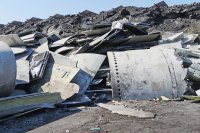
Krayenberggemeinde, 02.11.2026 (PresseBox) - Lightweight, rigid, corrosion-resistant, and designed for decades of use: GFRP and CFRP remain among the most high-performance materials in modern lightweight construction.
However, while materials such as waste wood or construction and demolition waste can be easily sorted by type at the end of their product life cycle and subsequently recycled, CFRP and GFRP present the recycling industry with a real “disposal dilemma”, the so-called end-of-life problem.
This is because the very properties that make fiber-reinforced plastics such versatile materials are also the reason why these robust fiber composites are comparatively difficult to dispose of.
GFRP and CFRP: What are fiber-reinforced plastics?
As the name implies, fiber-reinforced composites are composite materials in which two different components, which, on their own, would be unsuitable for many applications are combined: A plastic matrix holds the material together, while additional glass or carbon fibers enable an even distribution of tensile forces – thus ensuring maximum stability.
GFRP (glass-fiber-reinforced plastic) and CFRP (carbon-fiber-reinforced plastic) are the two dominant representatives within this material class. Both materials differ in terms of their properties and areas of application, but are equally affected by the disposal dilemma.
The type of plastic used is the primary factor determining the material’s recyclability. In practice, the use of duromers with irreversible, three-dimensional cross-linking is widespread: Since the fibers and matrix are chemically bonded in a way that cannot be undone, a structure is created that cannot be easily separated the core of the subsequent disposal problem. Although thermoplastic matrices would be significantly more recyclable, they have so far been used only rarely.
Would you like some advice? ARJES offers state-of-the-art shredding solutions for the processing of of CFRP/GRP waste. We can advise you on suitable machine designs and bespoke solutions.
Glass fiber vs. carbon fiber: structure, properties, and differences between GFRP and CFRP
GFRP and CFRP follow the same construction principle: glass or carbon fibers are embedded in a plastic matrix, usually epoxy or polyester resin. The orientation of the fibers in the laminate known as the fiber architecture determines the direction in which the component can ultimately withstand stress. Strength is present only along the direction of the load, not in all directions.
Apart from that, the two fiber-reinforced composites differ primarily in terms of weight, stiffness, and electrical conductivity:
GFRP
offers high impact and fracture resistance, as well as excellent weather and corrosion resistance. This makes the material ideal for large-area components exposed to the elements. Since glass fibers are electrically insulating, GFRP is also used wherever electrical conductivity is undesirable or even harmful- such as in the manufacture of printed circuit boards.
CFRP
is about five times lighter than steel and about 40% lighter than aluminum, while offering the same or higher strength. The high modulus of elasticity – a measure of stiffness against deformation – makes carbon-fiber-reinforced plastics the material of choice for structures that must bend very little or not at all, even under load.
But whether it’s GFRP or CFRP, fiber-reinforced plastics share a common weakness: Since the fibers and the matrix have fundamentally different material characteristics, the composite is inhomogeneous. This uneven structure complicates not only machining but also the recycling of fiber composites at the end of their life cycle. Added to this is the high abrasiveness of both materials, which further drives up tool wear and machining costs.
Fiber-Reinforced composites in practice: Production volumes and applications
GFRP and CFRP are definitely not niche materials. Rather, these innovative fiber-reinforced composites are shaping entire industries and have become indispensable in numerous sectors. Currently, GFRP dominates the market for fiber-reinforced composites in terms of volume, with steadily growing demand. The biggest driver of growth is increasing investment in renewable energy, particularly wind power.
According to the GFRP Market Report (2020), glass-fiber-reinforced plastics are used in Europe in the following sectors:
Transportation: 36%
Construction and infrastructure: 35%
Electrical and electronics: 14%
Polyester resin accounts for the majority of GFRP processing, with a market share of 62%. And for good reason. The material is inexpensive, versatile, and has long been the established standard for mass-produced goods. For example, rotor blades, boat hulls, piping, and facade elements are often made from GFRP.
Although the share of carbon fiber-reinforced plastic (CFRP) is smaller, the material is nonetheless highly relevant from an economic perspective. According to the German Federal Environment Agency, approximately 128,000 metric tons of CFRP were processed worldwide in 2017 of which 36% was used in the aviation industry, 24% in automotive manufacturing, and 13% in wind energy.
GFRP or CFRP – What are the advantages and disadvantages of each material?
GFRP is less expensive to manufacture and makes economic sense wherever large-area, weather-resistant components are needed but weight plays a relatively minor role.
CFRP is significantly more expensive than GFRP and is therefore generally used only where the specific application justifies the higher costs. This is always the case where every kilogram of additional weight directly affects operating costs and performance, for example in motorsports or aviation. At the same time, the material’s electrical conductivity effectively protects aircraft from lightning strikes. Furthermore, CFRP exhibits minimal fatigue and retains its high residual strength even after long-term stress.
A real challenge: Disposal and recycling of Fiber-Reinforced composites
Both GFRP and CFRP excel in terms of stability and durability: Both materials are corrosion-resistant- meaning they do not rust- and can easily withstand moisture.
However, what is an advantage during use becomes a problem at the end of the product life cycle: The commonly used thermoset matrix cannot be melted down. This rules out conventional plastic recycling, necessitating more complex alternative processes to ensure the material is disposed of properly.
Two sides of the same coin: The environmental impact of GFRP and CFRP
Even the production of glass or carbon fibers involves high energy costs. For example, the production of carbon fibers requires up to 286 MJ per kilogram. By comparison, steel requires around 20 to 30 MJ/kg.
During operation, the advantages of lightweight construction usually offset these impacts, for example through fuel savings in aviation. At the end of its life, however, the balance shifts once again:
Incineration
Carbon fibers withstand the heat largely unchanged and end up in the ash – without being recovered and without adding any value.
Landfilling
GFRP and CFRP are not biodegradable. The fibers persist indefinitely in the soil. Furthermore, landfilling of fiber-reinforced composites is prohibited by law within the EU.
Fiber Release
If the material is incinerated or otherwise processed, respirable particles may be released.
Lack of Repair Options
Repairing either material is also virtually impossible. In the event of structural damage, the only option is usually complete replacement, which in turn increases the amount of waste generated.
Companies that put fiber-reinforced plastics into circulation must ultimately bear the resulting disposal costs. Unlike with scrap metal, there is usually no revenue generated from this.
This lack of economic incentive hinders the development of structured recycling solutions. Nevertheless, the Federal Environment Agency reaches a clear conclusion: Recycling is more environmentally sound than all alternatives and should be specifically promoted. However, many recycling methods quickly reach their limits when it comes to GFRP and CFRP.
The downcycling cascade: Recycling processes and their limitations
The core problem of all recycling processes is the same: the duromer matrix and the reinforcing fibers are inextricably bonded together. The challenge is to break up this composite. This almost always compromises material qualit- resulting in a cascade where GFRP and CFRP lose further value with each recycling step: Originally high-performance components are turned into fillers in cement or asphalt and ultimately end up in landfills.
The three established methods mechanical recycling, pyrolysis, and solvolysis do not solve this fundamental dilemma. The gentler the process, the more expensive it is. The cheaper the process, the lower the quality of the result. Since processing costs often exceed the value of the recycled materials, they frequently cannot compete with virgin materials in terms of price. This is particularly evident with glass fibers: virgin material can be produced so cheaply that recycled materials are hardly competitive. With carbon fibers, although the demand for recycled materials is greater, the quality usually falls short of that of virgin material. Their use therefore remains limited to less demanding applications.
(Un)clarified responsibilities: Lack of infrastructure, landfill bans, and EPR
The disposal problem does not begin at the recycling plant, but rather during the dismantling of components at the end of their service life. Components made of fiber-reinforced composites are often large, heavy, and difficult to disassemble for transport. There are currently no uniform dismantling standards, nor is there a specialized waste code for GFRP and CFRP in Germany’s Waste Catalog Regulation. Furthermore, the handling of CFRP and GFRP waste is regulated differently from region to region. To date, there is no nationwide waste disposal infrastructure in Germany specifically designed for fiber-reinforced composite waste.
Furthermore, it is not legally clear who ultimately bears responsibility. While the principle of extended producer responsibility (EPR) holds manufacturers and distributors accountable, it does not apply to fiber-reinforced composites to the same extent as it does to other materials such as packaging, electrical appliances, or scrap tires. As long as this gap remains, the industry lacks the regulatory pressure to invest in structured recycling solutions.
A look into the future: Ways out of the “End-of-life” dilemma
As long as regulatory gaps persist and recycled materials cannot compete with virgin materials in terms of price, the industry lacks the structural incentive to change. Yet the pressure to act is growing: rising waste volumes, a lack of infrastructure, and a legal framework that remains unresolved are increasingly forcing the industry to rethink its approach. Solutions are already being developed in terms of both technology and materials.
At the same time, companies and waste management firms are trying to address the issue at the end of the product life cycle: In order for GFRP and CFRP waste to be disposed of properly at all, bulky composite components in particular must first be shredded.
This is exactly where we at ARJES come in: Our modern two-shaft shredders break down the material in a controlled manner, transforming the end-of-life fiber composites into a manageable form that can be safely transported, temporarily stored, and subsequently processed accordingly.
Disposal begins in the lab: New matrix systems and fiber types
There are many ideas and potential solutions for simplifying the disposal of fiber-reinforced composites such as CFRP and GFRP in the long term.
Modern recycling approaches, such as the thermal plasma process which has been tested since 2025 as part of the Plas4Plas pilot project aim to make recycling processes more efficient and sustainable in the future. However, it is not yet possible to conclusively assess whether and to what extent novel technologies will simplify the disposal and recycling of GFRP and CFRP.
Other approaches attempt to address the root of the problem. And in the case of GFRP and CFRP, this lies in the nature of the material itself. In other words: As long as duromers dominate the market, recycling remains structurally difficult because these resins cannot be melted down or cleanly separated once they have cured.
Thermoplastic matrices are meltable and thus significantly easier to recycle. GFRP waste can be combined with a thermoplastic matrix to form a completely new material and thus returned to a closed-loop system without requiring new raw materials. This approach is remarkable in that it does not rely on improved disposal of existing materials, but rather views the waste material itself as a resource, thereby requiring a fundamentally different understanding of recycling.
The Swiss company iwas-concepts AG and the FHNW have already tested this concept. This “proof of concept” demonstrates that a circular GFRP solution is indeed feasible under real-world conditions.
Other approaches are still under development:
Vitrimers
These novel plastics can be thermoformed without melting, thereby combining the structural strength of a duromer with the recyclability of a thermoplastic.
Bio-based resins
Resins made from renewable raw materials significantly reduce the consumption of fossil resources. However, they do not solve the end-of-life separation problem, because whether a resin is bio-based or not says nothing about how easily it can later be separated from the fiber.
Natural-fiber-reinforced plastics
Materials such as flax or hemp are biodegradable and are therefore generally easier to handle at the end of their life cycle than conventional fiber composites. For high-load applications, however, they lack the mechanical strength that characterizes carbon-fiber-reinforced plastics (CFRP) or glass-fiber-reinforced plastics (GFRP), which is why they have not yet been considered as replacements in load-bearing structures.
All of these approaches are based on a common guiding principle that is increasingly being discussed in professional circles as “design for recycling”: The choice of matrix and fiber type must be geared toward the component’s end-of-life already during the design phase, not only after it has reached the end of its service life.
Efficiently shredding GFRP and CFRP – Successfully recycling fiber-reinforced composites
New matrix systems and recycling-friendly design are promising approaches, but they can only be fully effective once they are industrially scalable. Until then, existing technologies must handle the volumes of fiber-reinforced composites that are generated. A prerequisite for the successful recycling of GFRP and CFRP waste remains that the material must first be mechanically broken down and reduced to a defined particle size. Shredding thus serves as the link between demolition logistics and all downstream recycling processes.
With fiber-reinforced composites, this process is significantly more challenging than with other materials, as their high abrasiveness quickly wears down tools and pushes standard machines to their limits. Against this backdrop, many suppliers currently do not offer a suitable solution for the pre-shredding of fiber-reinforced composites.
As a company specializing in the development of high-performance recycling machines, we at ARJES manufacture high-quality two-shaft shredders that meet all requirements for the proper disposal of fiber-reinforced composites. At the same time, we are working more closely with waste management companies to further develop the processing of fiber-reinforced composite waste in a way that is economically viable.
Our machines are specifically designed for heavy-duty applications and abrasive materials and provide the necessary power and robustness to reliably shred GFRP and CFRP.
The degree of shredding determines which recycling route ultimately makes economic sense:
Thermal recycling (cement industry)
Coarse particles are sufficient – GFRP serves as a substitute fuel and replaces fossil fuels.
Material recycling
The longer the fibers remain intact, the higher the quality of the recycled material and the broader the range of applications in the secondary market.
Pyrolysis and solvolysis
Both processes require a defined, homogeneous particle size. A finer degree of shredding means higher energy consumption, but also higher-quality recycled material.
If you have any questions, we are always available as qualified experts to provide advice. Contact us today. Together, we’ll find the right product for your specific application.
Ansprechpartner
Martin Priewe
+49 (3695) 85 855-265
Datei-Anlagen:

(440 kB)
1637580.attachment
Recycling GFRP and CFRP: Fiber-Reinforced composites at the end of their lifespan?

(539 kB)
1637571.attachment
Recycling GFRP and CFRP: Fiber-Reinforced composites at the end of their lifespan?

(240 kB)
1637572.attachment
Recycling GFRP and CFRP: Fiber-Reinforced composites at the end of their lifespan?
- Mehr Infos zu dieser Meldung unter www.pressebox.de
- zurück zur Übersicht