





Mittelstandspresse
15.10.2026
orcharhino 7.11 Introduces Modernized Proxmox Provisioning and Enhanced Automation and Cloud Features
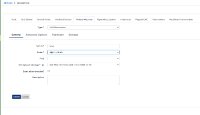
Munich, 15.10.2026 (PresseBox) - ATIX AG has released orcharhino 7.11, the latest version of its platform for lifecycle management, automation, and infrastructure orchestration. This release focuses on the further development of provisioning and automation processes in distributed and heterogeneous infrastructures. This includes a fundamentally redesigned boot disk workflow for Proxmox, as well as new features for Ansible Director and OpenTofu-based integration of compute resources.
For administrators, orcharhino 7.11 brings significant improvements to the day-to-day provisioning and management of systems. Communication with Proxmox during boot disk provisioning will now take place directly via the REST API, while also enabling targeted selection of storage. The Ansible Director, available as a Technology Preview, can now execute automation tasks via distributed orcharhino proxies and introduces “Variable Bindings,” a new concept for the persistent management of Ansible variables. In addition, the OpenTofu-based compute resource integration has been expanded to include STACKIT.
Further information on orcharhino is available at www.orcharhino.com.
Modernized Boot Disk Workflow for Proxmox
With orcharhino 7.11, the boot disk provisioning process for Proxmox VE has been redesigned. The goal is a more reliable and flexible workflow that simultaneously simplifies the necessary connections between orcharhino and the virtualization platform.
A key change concerns the upload of boot disk images. Instead of the previous SSH connection, orcharhino now communicates directly via Proxmox VE’s native REST API. A separate SSH access configuration for this process is therefore no longer required. For administrators, this reduces the number of required access paths and simplifies configuration, particularly in environments with restrictive network and security policies.
Additionally, it is now possible to specify the storage location for a boot disk image. This selection can be made both via the compute profile and in the virtual machine settings during host creation.
This selection is particularly relevant in larger Proxmox clusters, where storage pools are not necessarily available on all hypervisor nodes. With orcharhino 7.11, administrators can specifically select suitable storage for each system and thus tailor the provisioning process more precisely to the cluster’s structure.
Tech Preview: Ansible Director via Distributed orcharhino Proxies
The Ansible Director is enhanced with two key features in orcharhino 7.11. Both enhancements are designed to improve the management of Ansible automation across larger and distributed infrastructures. The Ansible Director remains marked as a Technology Preview in version 7.11.
The first new feature is support for orcharhino proxies to execute Ansible automations. This allows Ansible tasks to be executed even in distributed network zones via the proxies available there.
The proxies automatically retrieve the required Ansible Execution Environments (EE) from the central orcharhino server. This makes defined, containerized execution environments available in the various network zones. Ansible and Python versions, as well as other dependencies, can thus be consistently provisioned regardless of the host’s operating system.
For administrators, this simplifies automation in distributed infrastructures in particular: systems do not need to be directly accessible from the central orcharhino server, while at the same time uniform execution environments can be used to run Ansible tasks.
New Variable Bindings for Ansible Director
The management of Ansible variables has also been fundamentally redesigned in orcharhino 7.11.
Previously, variables were tightly coupled to a specific version of the respective Ansible content. If a new version was deployed via the lifecycle environments, this could necessitate additional adjustments to existing overrides.
The new variable bindings break this link. Variables can be permanently linked to Ansible content and remain in place even during updates and lifecycle promotions.
Variable bindings can be managed at different levels—directly within the content, as well as at the host group or host level. This allows administrators to centrally define common default values while also specifying specific values for individual host groups or systems.
The new concept reduces repetitive configuration steps and facilitates the controlled distribution of Ansible content across development, test, and production environments.
Tech Preview: STACKIT as a Compute Resource via OpenTofu
With orcharhino 7.11, the generic OpenTofu-based compute resource integration is further expanded. In addition to the providers already supported, STACKIT is now available as another cloud platform. This feature is provided as a Technology Preview.
Through the OpenTofu integration, administrators can deploy, provision, and remove virtual STACKIT instances directly from within orcharhino. This allows the corresponding cloud resources to be integrated into orcharhino’s existing provisioning and lifecycle processes.
For the initial configuration of the systems, standard cloud-init can be used in conjunction with custom user data templates. This allows new instances to be automatically configured upon first startup, registered with orcharhino, and subsequently incorporated into the designated patching and management processes.
STACKIT support builds on the generic OpenTofu approach introduced in earlier versions of orcharhino. Instead of having to develop a completely separate compute resource integration for each infrastructure platform, additional providers can be connected via the OpenTofu ecosystem. This allows support for different infrastructure and cloud platforms to be expanded incrementally.
About orcharhino
orcharhino is the comprehensive solution for the automation and orchestration of IT infrastructures. The enterprise open-source solution can be deployed in Windows and Linux environments and enables automated deployment, configuration and lifecycle management, as well as release and patch management. orcharhino can be operated both on-premises and in the cloud.
Developed by ATIX AG as an open-source product for businesses, orcharhino offers organizations of all sizes maximum flexibility, efficiency, and control—backed by a strong partner network and professional support.
For more information, visit www.orcharhino.com
Ansprechpartner
Sylvie Lübeck
Zuständigkeitsbereich: Pressekontakt
Über ATIX AG:
ATIX AG is a leading provider of solutions for enterprise IT infrastructures and enables efficient, scalable, and flexible system management. ATIX AG operates an ISO 9001:2015-certified quality management system for the development, support, consulting, and training of software solutions, as well as an ISO/IEC 27001-certified information security management system.
Datei-Anlagen:

(52 kB)
1633615.attachment
ISO upload storage selection – orcharhino 7.11

(209 kB)
1633617.attachment
New variable overview page – orcharhino 7.11

(130 kB)
1633618.attachment
Overview host-specific variables – orcharhino 7.11

(173 kB)
1633619.attachment
Managing hosts’ individual variables and bindings – orcharhino 7.11

(95 kB)
1633620.attachment
Create host using STACKIT – orcharhino 7.11
- Mehr Infos zu dieser Meldung unter www.pressebox.de
- zurück zur Übersicht