






Mittelstandspresse
01.06.2026
More Life at Sea: Unexpectedly High Biodiversity in the Deep-Sea Marine Protected Area
DNA analysis of amphipods in the northeastern Atlantic reveals underestimated biodiversity
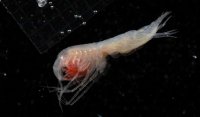
Frankfurt, 01.06.2026 (PresseBox) - An international research team has studied the genetic diversity of bottom-dwelling amphipods in the newly established “North Atlantic Current and Evlanov Sea Basin” marine protected area. A single sample collected from a depth of nearly 3,700 meters revealed 47 genetically distinct species. Extrapolations suggest there are over 120 species in this area, many of which have not yet been described. The results indicate that the biodiversity of the deep sea has been significantly underestimated. In light of the global goal to protect at least 30 percent of the total marine area by 2030, the new study, published in the journal “Frontiers in Marine Science,” emphasizes the critical importance as well as the challenges of marine conservation in the deep sea.
Amphipods are small, shrimp-like crustaceans found in nearly all marine and freshwater habitats, where they play an important role as decomposers of organic matter. “Amphipods carry their offspring in a brood pouch. Due to the absence of a larval stage and their typically restricted travel distance, amphipods can only spread to a limited extent. This makes them particularly valuable for studies in biogeography – that is, for understanding how species are distributed across the globe,” explains Dr. habil. Anne-Nina Lörz of Senckenberg am Meer (Senckenberg by the Sea) in Hamburg.
Together with a Polish-Austrian-German research team, Lörz studied the diversity and distribution of amphipods living on the seafloor in a newly established marine protected area, the “North Atlantic Current and Evlanov Sea Basin” (NACES). Located in the northeastern Atlantic, the NACES protected area is one of the largest of its kind: It covers approximately 600,000 square kilometers of international waters. “Originally, the area was established to protect important feeding grounds for seabirds. Later, however, the high importance of the deep sea and its sensitive ecosystems was recognized, leading to the expansion of the protected area in 2023 to include the seafloor,” explains Lörz, the study’s lead author.
In their study, the researchers analyzed a total of 253 DNA sequences from amphipods, including samples from the NACES protected area, the Labrador Sea region, the Azores, and other regions of the Atlantic, Pacific, the Indian Ocean, and Antarctica. The samples were collected from depths between 3,000 and 4,000 meters and were primarily obtained during the 2021 IceDivA 2 expedition, led by Senckenberg marine scientist Prof. Dr. Saskia Brix aboard the research vessel SONNE in the northwestern Atlantic. A single sample taken from a depth of 3,677 meters in the NACES area already revealed 47 genetically distinct species units comprising 98 individuals. “Our extrapolations suggest that over 120 species may actually live there. This shows that even in a small area, biodiversity on the seafloor is surprisingly high,” adds the marine researcher, and she continues, “Most of these genetic units could not be assigned to any known species – many are likely undescribed, meaning they are new to science.”
The research team has now scientifically described and named two of the newly discovered species: Cleonardo helga and Cleonardo davinci. The first is named after the grandmother of study author Laura Engel, who was a master’s student under Lörz; the second honors Leonardo da Vinci, whose visionary mobility designs and anatomical drawings have significantly expanded our understanding of natural structures. The researchers were particularly surprised to find that the newly discovered species from the protected area could also be identified in other parts of the world – for example, in the Pacific Ocean, some 10,000 kilometers away. This discovery was made possible by comparing genetic data. The team sequenced amphipods from earlier expeditions in various oceans that had not yet been precisely identified. This revealed that the sequences of the newly discovered species in the protected area matched parts of these samples. “The fact that we found genetic matches with samples from distant ocean regions shows how little we actually know about the true distribution of these species,” explains the researcher. “Apparently, some amphipods are much more widespread than we had previously assumed.”
“The decline of marine species due to human impacts threatens key ocean services, including the provision of food and carbon sequestration, which are of great importance to the global climate system and stable ecosystems,” emphasizes Lörz. To counteract this, the Biodiversity Agreement adopted in 2022 set a goal of placing at least 30 percent of the world’s marine area under protection by 2030.
“Implementing the 30×30 target in the high seas is particularly challenging, as this environment is vast, difficult to access, and has been insufficiently studied to date. Currently, less than one percent is under strict protection,” says Lörz, and she continues, “Our study is based on a single sampling site in the NACES region and can therefore only provide a partial picture of the diversity there. However, the results suggest that the high species diversity is not an isolated case but is also typical of other deep-sea regions.” The research team suspects that the diversity of the deep sea has been underestimated to date, as many species remain undescribed, there are cryptic species, and previous studies were often conducted without genetic analyses.
“Our combination of DNA analysis and morphology shows that the deep sea harbors an extremely high level of biological diversity. At the same time, it is one of the least explored habitats on Earth. This knowledge deficit makes it difficult to implement effective conservation and management measures, especially in light of increasing pressure due to resource extraction, pollution, and climate change,” adds Lörz in conclusion.
Publication: Lörz A.-N., Engel L., Jażdżewska A.M., Kaiser S. and Schwentner M. (2026): From local discovery to global insights: deep-sea amphipod diversity in a high-seas marine protected area and its conservation implications. Front. Mar. Sci. 13:1763044. doi: 10.3389/fmars.2026.1763044, https://www.frontiersin.org/journals/marine-science/articles/10.3389/fmars.2026.1763044/full
Ansprechpartner
Judith Jördens
+49 (69) 7542-1434
Zuständigkeitsbereich: Pressestelle
Dr. habil. Anne-Nina Lörz
Zuständigkeitsbereich: Senckenberg am Meer
Datei-Anlagen:

(24 kB)
1610320.attachment
More Life at Sea: Unexpectedly High Biodiversity in the Deep-Sea Marine Protected Area
- Mehr Infos zu dieser Meldung unter www.pressebox.de
- zurück zur Übersicht