





Mittelstandspresse
22.05.2026
What If Products Could Tell Their Own Story?
How Digital Products Marking is driving Circular Economy, Compliance, and Consumer Trust.
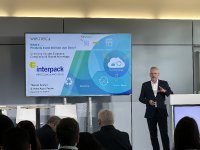
Kaiserslautern, 22.05.2026 (PresseBox) - At this year’s interpack in Düsseldorf, one of the world’s leading trade fairs for processing and packaging, WIPOTEC’s Asia | Pacific Director, Thomas Krämer, presented an insightful talk on the future of Circular Economy and digital transparency. His presentation explored how product marking, serialization, and digital product identities are becoming key enablers for sustainable business models, regulatory compliance, and stronger consumer engagement.
The topic was approached from a simple but powerful question: What if products could tell their own story?
The circular economy is no longer a distant vision. It is becoming a business imperative — driven by sustainability goals, regulatory pressure, and growing consumer expectations.
But what if every product could actually communicate where it came from, what it is made of, and where it should go after use?
This idea may sound futuristic, yet it is rapidly becoming reality through digital product marking, QR codes, and connected data systems.
Today’s economy still follows a largely linear model: take, make, waste. Products are manufactured, consumed, and discarded — often without transparency about materials, origin, or recyclability. As a result, valuable resources are lost, recycling processes become inefficient, and sustainability claims remain difficult to verify.
The challenge is clear: without transparency, there can be no true circular economy.
From Linear to Circular Thinking
The transition toward circularity requires more than recyclable materials. It requires data.
Manufacturers, recyclers, retailers, and consumers all need access to reliable product information across the entire lifecycle. This includes:
Material composition
Product origin
Repairability
CO₂ footprint
Recycling instructions
End-of-life pathways
This is exactly where digital technologies become essential.
By giving every product a unique digital identity — for example through printed or laser-marked QR codes — products become part of an intelligent data ecosystem rather than isolated physical objects.
A simple scan can unlock an entire digital product history.
Why Digital Product Marking Matters
Digital product marking creates the foundation for traceability and transparency. Every marked product can generate valuable lifecycle data throughout production, distribution, use, reuse, and recycling.
This enables manufacturers to:
Track products across the supply chain
Improve recycling and material recovery
Enable Digital Product Passports (DPP)
Support sustainability reporting
Increase consumer trust through transparency
Prepare for future regulatory requirements
One code can enable three critical functions simultaneously:
Data generation and traceability
Compliance with upcoming regulations
Consumer engagement through digital interaction
Or, as Thomas describes it: “Small Keys can open Big Doors.”
Compliance Is Becoming Strategic
European regulations such as the Packaging and Packaging Waste Regulation (PPWR) and the Ecodesign for Sustainable Products Regulation (ESPR) are accelerating this transformation.
These regulations are reshaping the market by making transparency mandatory.
Manufacturers will increasingly need to provide verifiable information about packaging and products, including recyclability, material composition, environmental impact, and lifecycle data. Digital Product Passports are expected to become a central tool for achieving this transparency.
This means product marking is no longer just a technical add-on.
It becomes strategic infrastructure.
Without product identity, there is no reliable data. Without data, there is no traceability. And without traceability, compliance and market access become increasingly difficult.
From Compliance to Competitive Advantage
Forward-thinking companies are already moving beyond minimum requirements.
Projects such as Coca-Cola’s RefPET serialization initiative demonstrate how digital identities can support recycling systems, traceability, and customer engagement simultaneously.
The real opportunity lies not only in fulfilling regulations, but in building entirely new levels of trust and interaction.
Consumers increasingly want to know:
Where products come from
How sustainable they really are
How they can be repaired or recycled
Whether environmental claims are transparent and verifiable
Digital links and connected QR codes transform products from “black boxes” into “open windows.”
The Future of Circularity Starts with Data
The circular economy begins with visibility.
When products can communicate their composition, journey, and recycling pathways, materials can remain in circulation longer, and waste can be significantly reduced.
The future points toward interoperable systems where manufacturers, recyclers, retailers, and consumers share access to the same trusted product information.
From a linear lifecycle to an intelligent circular system.
The question is no longer whether digital transparency will become necessary.
The real question is:
Have you already treated product marking as strategic infrastructure?
Because sustainability is no longer optional — it is an expectation.
And the companies that start building the right digital foundations today will be the ones shaping the standards of tomorrow.
Ansprechpartner
Irina Cevallos
+49 (631) 34146-0
Zuständigkeitsbereich: MarCom Specialist
Über WIPOTEC GmbH:
Wipotec is a trusted global provider of precision weighing, inspection, and quality assurance solutions, serving industries ranging from food and beverage to pharmaceuticals and logistics. With a focus on innovation and customer satisfaction, Wipotec delivers advanced systems that ensure safety, efficiency, and compliance.
Wipotec is a world-leading supplier of intelligent weighing and inspection technology. At its headquarters in Kaiserslautern, Germany, the company develops and manufactures market-leading weigh cells for ranges from micrograms to 120 kg, as well as unique machine solutions distributed globally through over 100 subsidiaries and partner companies.
Founded in 1988, Wipotec offers a wide range of high-tech weighing and inspection systems, continuously developed in collaboration with trusted partners across the postal, courier express parcel (CEP), and intralogistics sectors.
The hallmark “Designed, engineered and manufactured in Germany” stands for premium quality and measurable customer value in high-performance applications. The company’s success is driven by more than 800 highly motivated employees and a commitment to innovation.
Website https://www.wipotec.com
Datei-Anlagen:

(1 MB)
1609080.attachment
interpack forum - Thomas Krämer, Wipotec.

(2 MB)
1609082.attachment
Full house at the Forum - Interpack - Thomas Krämer

(2 MB)
1609081.attachment
interpack, Forum - Thomas Krämer.
- Mehr Infos zu dieser Meldung unter www.pressebox.de
- zurück zur Übersicht