




Mittelstandspresse
05.09.2026
Try It Before You Buy It: SF2 Systems Makes Industrial Condition Monitoring Accesible to Everyone
Skip massive budgets and long rollouts. With SF2, a dataset and a little curiosity are enough to start: engineers and technicians can analyze machine data locally, compare system states and spot critical changes early – all starting free of charge.
Wien, 05.09.2026 (PresseBox) - In the world of industrial condition monitoring, getting started usually means jumping through endless hoops: sales pitches, executive presentations, budget request and months of project planning.
With the launch of its new industrial condition monitoring suite, SF2 Systems is flipping that model on its head: users can now start directly with their own data. SF2 Suite SE is available now as a free download for Windows, macOS and Linux. Anyone with historical sensor or process data in CSV format can load it onto their own computer to discover hidden trends and detect system changes – completely offline, without cloud uploads, and with zero disruption to active operations.
Don’t buy first only ti find out later if it works. Test it with their your own data first– then decide if you want to scale.
Price should no longer be a reason not to try.
This low-barrier approach is entirely intentional.
“I want to democratize condition monitoring,” explains Francisco De Sousa Webber, Founder and Technical Lead at SF2 Systems. “A specialized manufacturer producing micro-gears should be able to monitor its milling machines without having to kick-off a six-month digitalization project. The technicians who know these machines inside and out should have the power to set it up themselves.”
To make that vision a reality, the barriers to entry have therefore been se t as low as possible. The SF2 Suite Standard Edition (SE) is permanently free of charge. The non-commercial Maker version of the SF2 Suite Real-Time (RT) costs a one-time fee of €99, while the Academic version costs €199. For businesses, commercial real-time use starts at a one-time fee of €490; for companies and organizations with annual revenues of up to €5 million, the price is €990 once.
The Suite remains usable indefinitely. Commercial licenses include full use of the productive SF2 Engine Runtime for the first 12 months. Additional engine instances cost €249/year, with custom licensing available for large-scale rollouts.
Unusually affordable for industrial software? Absolutely.
"Maybe we really do want to be a little bit like the Robin Hood of condition monitoring," Webber adds with a smile. "Not because professional technology shouldn't have value, but because there's no good reason why only fortune-500 corporations should have the opportunity to unlock the value hidden inside their machine data."
Keeping the upfront costs minimal, is therefore not a discount strategy but part of SF2 Systems’ product philosophy. A technician should be able to get curious and simply start." Technicians can experiment freely, engineering firms can prototype new services, makers can explore ideas without a formal business plan, and mid-sized factories don't have to risk tens of thousands of Euros just to evaluate a potential use case
There should be zero friction between 'I'm curious' and 'Let's give this a shot. What does your machine tell you us as a whole?
Technically, SF2 starts with a problem that is no longer a problem in many industrial operations: data collection. Pressure, temperature, power consumption, flow rate, rotational speed, vibration and many other process variables are widely recorded continuously. The real challenge lies in translating these isolated streams of numbers into a clear, big-picture understanding of how the overall machine or system is evolving over time.
There are precisely the relationships SF2 makes comparable.
The software converts raw sensor and time-series data into compact semantic fingerprints. Similar operational states produce similar fingerprints. This allows users to immediately measure how closely a machine’s current behavior matches its baseline normal state, a transition phase, or a known fault condition..
This holistic view is particularly effective for catching subtle, gradual degradation—such as bearing wear, pump drift, or tool erosion—where individual sensor readings might still look "normal," but the combined interaction of signals reveals that something has shifted.
In a real-world test on a water-pump system, SF2 successfully flagged critical state changes four full days before a documented system failure occurred. Cases like this demonstrate why it can be useful to look not only at individual thresholds, but at how the overall system state develops over time.
The fundamental question SF2 answers is deceptively simple: Is my machine still behaving the way it normally does, or is something starting to change?
Built for people who know their machines
SF2 explicitly makes no promises of magic.
Downloading software will not give you domain expertise if you don't already understand your machinery, process, or data. However, in most industrial facilities, that expertise already exists among maintenance engineers, automation specialists, process technicians, equipment builders, and field engineers.
“We are not here to tell these people that some AI is going to do their job better than they can,” says Webber. “Quite the opposite. We assume that they heir machines and processes and understand what matters. We are giving them a powerful tool that connects their domain knowledge directly to their data so they can get more out of it.”
Because SF2 is vendor-agnostic and works with any sensor type or machine class, it serves as a modular building block. Beginners can work entirely through the intuitive graphical interface, while advanced users can integrate models into custom software stacks via APIs and SDKs.
This also makes SF2 particularly attractive for engineering firms, automation specialists and technical service providers. They can use the technology as the core of their own solutions rather than having to develop the data-driven condition-analysis layer from scratch for every new application.
From a CSV file to live operations
The journey from testing to production is designed to be seamless.
Use the free SF2 Suite SE to analyze historical CSV data locally and build state models. Once a viable use case is proven, you can upgrade to SF2 Suite RT. The SF2 Engine RT then runs the model directly on local hardware, processing live data streams and feeding status or trigger signals back into existing PLC, SCADA, or MES environments.
Your existing infrastructure stays untouched. SF2 does not replace existing sensors, control systems or automation. It adds a smart comparison layer on top.
Crucially, your data never has to leave your facility—analysis and production can take place entirely locally. For industrial OT networks with strict requirements around data sovereignty, cybersecurity, cyber-resilience, and business continuity, this local-first architecture provides total peace of mind.
Prove First. Scale Later.
SF2’s business model aligns directly with customer success.
Companies can start with a single dataset, monitor one critical machine, and expand across the facility only as value is demonstrated. SF2 therefore does not make its money by making the entry point as expensive as possible, but by making the solution useful enough in practice so customers want roll it out further.
“My aim is to have as little bullshit as possible,” says Webber. “Be clear about what the software can do. Be clear about what it costs. Download it, try it and judge for yourself. I don't want to sell grand theoretical visions. I want engineers to plug in their data and see immediate, practical results.”
That no-nonsense philosophy extends to the current AI debate as well. While SF2 uses data-driven learning to extract semantic structures, once a model is locked and versioned, its behavior is 100% deterministic and reproducible: identical input data will always generate the exact same fingerprint and result.
“We do not need to slap ‘AI’ on everything just because it’s fashionable,” says Webber. “At the end of the day, only one question matters: Does it work with real operational data or not?”
Early users should help shape the product
By offering tailored Maker, Academic, and small-business licenses, SF2 intentionally aims to get the software into the hands of people who want to experiment, discover unconventional use cases, and share real-world feedback. That input will directly feed into the continued development of the software.
“I would be delighted if our first users were not just customers, but to some extent fellow contributors,” says Webber. “If someone tries something and tells us openly what works well and where a workflow still feel clunky, we can use that insight to build a better product.”
While SF2 Systems was founded in Vienna in 2026, its technological core is mature: Semantic Folding has been refined for over a decade and is now being adapted for industrial sensor and time-series data.
The initial release includes standard versions for Windows, macOS and Linux. Performance-optimized builds for specialized hardware and GPU configurations will follow in subsequent releases.
Why Not Just Give It a Try?
Not every company needs an immediate, full-scale predictive maintenance initiative. Not every machine needs additional sensors. And not every good idea needs a budget before just to explore its potential.
Sometimes, all it takes to get started is a CSV file, an engineer who knows the machine, and a bit of curiosity.
That is precisely why the SF2 Suite is now available for download.
Download the free SF2 Suite SE at: https://sf2systems.com/produkte/software/studio-se
All additional editions will be available for download in the SF2 online shop www.sf2systems.com/shop starting September 14, 2026.
Ansprechpartner
Christoph Gretzmacher
Zuständigkeitsbereich: Business Development
Über SF2 Systems GmbH:
SF2 Systems is a Vienna-based deep-tech company specializing in software-based condition analysis of complex machines, industrial assets, and processes across industry, energy, and critical infrastructure. Vendor- and sensor-agnostic, the technology combines existing operational data into comparable state fingerprints. This makes drift and gradual degradation visible early – reproducibly, transparently, without black-box models, and without requiring large labeled failure datasets.
Designed to complement existing condition-monitoring and automation systems, SF2 is built for brownfield and OT environments. It runs locally at the edge or on-premises with zero cloud dependency, keeping sensitive operational data strictly in-house. This enables early anomaly detection, reduces unplanned downtime, and makes maintenance far more predictable.
Additionally, SF2 is exploring applications for its core technology in biotechnology and life sciences.
Datei-Anlagen:

(3 MB)
1626283.attachment
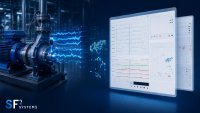
Condition Monitoring with SF2 starts with the data already available: The SF2 Suite brings existing sensor and process data together in a single analysis environment and transforms it into comparable state fingerprints. Engineers can analyze operating states and identify changes or drift early – locally, without sending data to the cloud.
- Mehr Infos zu dieser Meldung unter www.pressebox.de
- zurück zur Übersicht