



Mittelstandspresse
01.09.2026
Results for the six months ended 30 June 2026 and interim dividend declaration – Short form announcement
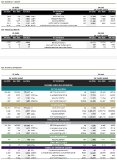
Johannesburg, 01.09.2026 (PresseBox) - Sibanye-Stillwater (JSE: SSW and NYSE: SBSW) – https://www.commodity-tv.com/play/sibanye-stillwater-focus-on-maximizing-margins-and-operational-efficiency/ – is pleased to report operating results and consolidated interim financial statements for the six months ended 30 June 2026 (H1 2026).
SALIENT FEATURES FOR THE SIX MONTHS ENDED 30 JUNE 2026 (H1 2026) COMPARED WITH 30 JUNE 2025 (H1 2025) (YEAR-ON-YEAR)
During H1 2026, the Group delivered its best safety performance based on lagging indicators. Tragically, following a fatality-free Q1 2026, the Group experienced a fatal incident at its SA PGM operations and a fatal incident at its SA gold operations. We mourn the loss of three colleagues as a result of these incidents
Exceptional financial performance, with record revenue of R90bn (US$5.5bn), up 64%, and adjusted EBITDA of R31.8bn (US$1.9bn), up 111%, supported by stable operational delivery and stronger commodity prices
Significant increase in profitability, generating a profit of R18.8bn (US$1.1bn)
Record net cash from operating activities of R19.6bn (US$1.2bn), with 45% of adjusted EBITDA converted into notional free cash flow of R14.5bn (US$881m)
High operating margins from the SA portfolio, with SA PGM and SA gold all-in sustaining cost (AISC) margins of 44% and 32%, respectively
Disciplined capital allocation resulted in a 20% reduction in gross debt year-on-year to R32.1 billion (US$1.99bn), and an 18% reduction from H2 2025, while net debt halved and net debt to adjusted EBITDA gearing ratio improved to 0.18x
Strong cash generation supported the declaration of an interim dividend of R5.7bn (US$352m) equivalent to 201 SA cents per share (49.73 US cents per ADR) at upper end of policy range, representing a 6.6% 10 trailing 12-month yield and an 8%10 implied annualised yield based on the interim dividend
High-return, organic growth investment confirmed for Burnstone (adding >130kozpa gold) and Mt Lyell (adding ~26ktpa copper), in addition to the four SA PGM brownfields projects already in execution, and Keliber ramping up operations with 217.5kt ore mined
The Group reports adjusted earnings before interest, taxes, depreciation and amortisation (EBITDA) based on the formula included in the facility agreements for compliance with the debt covenant formula. The Group also reports All-in sustaining costs (AISC) for comparison to similar industry metrics used in the mining industry. See "Non-IFRS measures" for more information on these metrics presented by Sibanye-Stillwater. Adjusted EBITDA may not be comparable to similarly titled measures of other companies. Adjusted EBITDA and AISC are not measures of performance under IFRS Accounting Standards and should be considered in addition to and not as a substitute for any other measure of financial performance and liquidity. For a reconciliation of profit/(loss) before royalties and tax to adjusted EBITDA, see note 19 of the condensed consolidated financial statements. The adjusted EBITDA amount in US$m for the six months ended 31 December 2025 is calculated using the adjusted EBITDA amount in US$m for the year ended 31 December 2025 less the adjusted EBITDA amount in US$m for the six months ended 30 June 2025
The Platinum Group Metals (PGM) production in the SA operations is principally platinum, palladium, rhodium and gold, referred to as 4E (3PGM+Au) and measured at the concentrator, and the US underground operations is principally platinum and palladium, referred to as 2E (2PGM)
The SA PGM production excludes the production associated with the purchase of concentrate (PoC) from third parties. For a reconciliation of the production and third party PoC, refer to the "Reconciliation of operating cost excluding third party PoC for Total SA PGM operations and Marikana - Six months"
See "Salient features and cost benchmarks - Six months" for the definition of All-in sustaining cost (AISC). The SA PGM All-in sustaining cost excludes the production and costs associated with third party PoC
The US PGM operations’ underground production is converted to metric tonnes and kilograms, and financial performance is translated to SA rand (rand)
During the six months ended 30 June 2025 the US PGM operations recognised R2,466 million (US$139 million) which relates to Section 45X Advance Manufacturing Production Credits applicable to the 2023 and 2024 financial reporting years and presented as a reduction to mining costs. The US PGM operations’ All-in sustaining cost for the six months ended 30 June 2025 were adjusted to exclude the Section 45X Advance Manufacturing Production Credits applicable to the 2023 and 2024 financial reporting years
Recycling includes Reldan Pennsylvania (PA), Metallix North Carolina (NC) and Montana recycling sites. The acquisition of the NC site was concluded on 4 September 2025. The six months ended 31 December 2025 only includes the results of the NC site since acquisition
Payable zinc production is the payable quantity of zinc metal produced after applying smelter content deductions
Average equivalent zinc concentrate price is the total zinc sales revenue recognised at the price expected to be received excluding the fair value adjustments divided by the payable zinc sales
Based on the closing share price of R50.28 on 28 August 2026. The 6.6% trailing 12-month dividend yield is calculated using combined dividends of 332 SA cents per ordinary share, comprising the H1 2026 interim dividend of 201 SA cents and the FY2025 final dividend of 131 SA cents. The 8.0% implied yield is calculated by annualising the H1 2026 interim dividend of 201 SA cents per ordinary share and the same reference share price.
OVERVIEW OF THE RESULTS FOR THE SIX MONTHS ENDED 30 JUNE 2026
In January 2026, we shared a refreshed Group strategy that prioritises our business fundamentals. This strategy outlined a focus on optimising profitability, which, combined with disciplined capital allocation, would create flexibility to deliver long term value accretive growth. During the period under review, we have continued to drive profitability through our strategic priorities including increasing operating margins through performance excellence, improving cost efficiencies through simplification of our operating model, enhancing capital returns through simplifying our portfolio and improving cash conversion.
A solid operational performance during H1 2026, combined with strong commodity prices, have generated significant earnings and cash. This has not only demonstrated the value and earnings potential of our unique portfolio, but also allowed the company to materially advance our short term strategic objective of strengthening the business fundamentals.
The Group delivered record revenue of R90bn (US$5.5bn), a 111% increase in adjusted EBITDA to R31.8bn (US$1.9bn), record net cash from operating activities of R19.6bn (US$1.2bn) and a net profit of R18.8bn (US$1.1bn), compared to a net loss of R3.9bn (US$211m) for H1 2025. The quality of this result is reflected in the conversion of 45% of adjusted EBITDA into notional free cash flow of R14.5bn (US$881m).
The stronger financial position enabled the Group to deliver against its capital-allocation priorities. This includes declaring an interim dividend of R5.7bn (US$352m), strengthening the balance sheet, with gross debt declining by 20% to R32.1 billion (US$1.99bn) and net debt more than halving to R9.7bn (US$593m), reducing net debt to adjusted EBITDA to 0.18x, as well as continuing to invest in value-accretive organic growth through commodity cycles.
SAFE PRODUCTION
Safety remains our foremost priority and the foundation of performance excellence. The Group achieved its best-ever H1 total recordable injury frequency rate (TRIFR) and serious injury frequency rate (SIFR), with both improving by 8%, while high-potential incidents reduced by 31%, reflecting real risk reduction in our operations.
These improvements were overshadowed by the tragic loss of Khanyile Magwebelele from our Marikana K3 shaft, and Thekololo Nkoe and Xolisa Mtshutshwana from our Kloof Masimthembe shaft, in two separate incidents during Q2 2026, following a fatality-free first quarter. We extend our deepest condolences to their families, friends and colleagues.
The sustained fatal free achievements across the majority of our operations, demonstrates our ability to eliminate fatal incidents and serious harm, and achieving this consistently across the entire group remains our highest priority. To achieve this our focus prioritises visible safety leadership, disciplined verification and application of critical controls, empowered teams, effective management routines and sustained implementation of lessons learned across all operations.
OPERATING PERFORMANCE
The SA PGM operations continued to deliver consistent production of 831,307 4Eoz (including third party purchase of concentrate), reflecting a year on year decline of 1% , largely driven by lower surface production and lower attributable production from Mimosa. Steady production output combined with disciplined cost management and significantly stronger 4E PGM basket prices (a 67% increase), delivered strong earnings and cash generation for the Group. The SA PGM operations delivered an industry competitive 44% AISC margin, while adjusted EBITDA increased by 302% to R19.2 billion (US$1.2 billion) and Notional free cash flow of R10.4 billion (US$631m) was generated.
Production across the SA gold operations declined by 2% to 9,134kg (293,665oz), associated with a 9% decrease in underground production, primarily due to the rebasing of the Kloof operations in H2 2025, offset by a 13% increase in surface production, reflecting the transition towards a shallower, higher margin, longer-life portfolio. Higher sales volumes of 9,588kg (308,261oz), combined with a 35% increase in the average gold price, resulted in the SA gold operations delivering record adjusted EBITDA of R9.0bn (US$549m), and Notional free cash flow of R4.0bn (US$241m). Despite cost pressures, with AISC increasing by 14% to R1.64 million/kg (US$3,105/oz), due to inflationary cost increases, higher royalties associated with increased profitability, higher pumping costs at Driefontein and higher third-party aggregate purchase costs (due to higher gold prices) at Cooke, the SA gold operations delivered a robust 32% AISC margin. The supportive gold-price environment provides an opportunity to assess the potential economic extraction of additional reserves at Kloof beyond 2026, including through the support of appropriately priced hedging mechanisms.
The US PGM operations continued to advance their mechanisation strategy during H1 2026. Production decreased by 2% primarily due to lower grades at East Boulder, while AISC increased by 12%, as planned investment, development activity and sustaining capital expenditure increased in support of the transition to full mechanisation. Despite these near-term investments, AISC of US$1,347/2Eoz (R22,105/2Eoz) remained below the lower end of annual guidance, supporting a 12% AISC margin. A 70% increase in the average 2E PGM basket price, stronger by-product credits and Section 45X credits further supported profitability. The mechanisation strategy to reduce AISC to approximately US$1,000/2Eoz by the end of 2028 progressed during the period under review, with progress across critical mine development and successful testing of mechanised bolting equipment. In addition, engagements with organised labour and employees has been progressing to secure a labour agreement supportive of the required transition to mechanisation and associated changes to a team-based incentive scheme.
The Recycling operations delivered a standout H1 2026 performance, with increased scale, successful integration and feed optimisation driving higher volumes, margin expansion and strong cash generation from the integrated recycling platform. Adjusted EBITDA increased by 11% to US$164 million (R2.7 billion), and excluding the impact of Section 45X credits, the EBITDA margin improved to 13% from 5% in H1 2025. Normalising for S45X credits in both periods, underlying adjusted EBITDA increased by 536% year-on-year to US$137 million (R2.2 billion). This performance reflects the addition and successful integration of North Carolina, significantly higher Pennsylvania production, operational and commercial synergies across the Recycling operations, favourable precious-metal prices and the optimisation of higher-margin feed streams. The improved performance was further supported by disciplined working capital management, with precious metal ounces recycled and sold increasing by 142% to 2.8 million precious metal ounces. Equivalent gold ounces recycled and sold amounted to 244koz for H1 2026 (H1 2025: 165koz). The recycling business is a strategic contributor to Group earnings and cash generation, while providing diversified exposure to precious metals through a scalable, capital-light processing platform.
The Century operation remained profitable and cash generative as the current tailings-retreatment operation approaches the end of its life. The operation delivered a 54% increase in adjusted EBITDA to US$55 million (R900 million), with higher zinc concentrate prices and lower treatment charges offsetting lower production as operational flexibility reduced towards the end of its current mine life. AISC increased by 23% to US$2,162/tZn (R35,477/tZn) due to lower production volumes and inflationary cost pressures.
The Keliber lithium project achieved important milestones during H1 2026 as it progressed from construction towards commissioning and operational readiness. Mining commenced at the Syväjärvi mine, with 217.5kt of ore mined and a strategic stockpile of 185.5kt established. Hot commissioning of the concentrator commenced in April 2026, with continuous operating runs of up to 142 hours demonstrating successful throughput performance. The current focus is on optimising spodumene concentrate grade and achieving stable, consistent concentrate production. The project remains within its approved capital forecast, with cumulative construction expenditure of €719m at 30 June 2026. In response to lithium-market volatility, the staged commissioning approach prioritises stable mining and concentrator performance before refinery start-up, reducing integrated ramp-up risk and preserving capital flexibility.
DISCIPLINED CAPITAL ALLOCATION AND ORGANIC GROWTH FOR SUSTAINABILITY
Our approach to sustainability is broader than just environmental and social performance. It starts with sustaining a safe, competitive and financially resilient business, supported by operational excellence and disciplined investment in longer-life, higher-quality assets. This strengthens our ability to manage resources responsibly, deliver returns and economic value, and create enduring shared value for our shareholders, employees, communities and all other stakeholders.
Record cash generation materially strengthened the balance sheet and expanded financial flexibility. Gross debt declined by 20% year-on-year and 18% from 31 December 2025 to R32.1bn (US$2.0bn), while net debt more than halved to R9.7bn (US$593m), reducing net debt to adjusted EBITDA to 0.18x.
The Group continued to unlock embedded value through disciplined investment in organic growth. This has primarily considered the SA PGM brownfield project portfolio that benefits from existing infrastructure, established resources and extensive operating knowledge, all reducing execution risk and avoiding acquisition premiums. SA PGM brownfield projects provide a possible pathway to sustain an approximate 1.5Moz annual production profile, increase exposure to UG2 ore and support a greater contribution from mechanised mining.
In addition, we are pleased that Burnstone and Mt Lyell have recently received a positive investment decision by the Board to proceed, marking a further step in unlocking unrealised value from the Group’s organic project portfolio.
Burnstone supports the transition of the SA gold portfolio towards shallower, lower-risk and longer-life production. The project is expected to produce approximately 130,000oz of gold annually at steady state, strengthening future reserve replacement and portfolio sustainability.
Mt Lyell, the long-life, copper-gold project located near Queenstown, Tasmania, benefits from substantial existing infrastructure and is expected to produce approximately 26kt of copper, 16koz of gold and 116koz of silver annually at steady state, with first production targeted for early 2029. Approximately US$4.1m (R68m) of capital expenditure is planned for H2 2026, as the project moves into execution.
Projects in the Group's portfolio will continue to be evaluated and sequenced according to returns, affordability, readiness and strategic fit, balancing shareholder returns and balance-sheet strength with investment in future production and portfolio quality.
DIVIDEND DECLARATION
The Sibanye-Stillwater board of directors declared and approved a cash dividend of 201 SA cents per ordinary share (US 12.43 cents* per share or US 49.73 cents* per ADR) or approximately R5,685 million (US$352 million*) in respect of the six months ended 30 June 2026 (Interim dividend).
The interim dividend declared of 201 SA cents equates to 35% of normalised earnings for the period ended June 2026. See note 11 of the consolidated interim financial statements for more detail on dividends.
The interim dividend will be subject to the Dividends Withholding Tax. In accordance with paragraph 7.23 of the JSE Listings Requirements the following additional information is disclosed:
The dividend has been declared out of income reserves
The local (South African) Dividends Withholding Tax rate is 20% (twenty per centum)
The gross South African dividend amount is 201.0000 SA cents per ordinary share for shareholders exempt from the Dividends Tax
The net South African dividend amount is 160.8000 SA cents (80% of 201 SA cents) per ordinary share for shareholders liable to pay the Dividends Withholding Tax
Sibanye-Stillwater currently has 2,830,567,264 ordinary shares in issue
Sibanye-Stillwater’s income tax reference number is 9723 182 169
Shareholders are advised of the following dates in respect of the interim dividend:
Interim dividend: 201 SA cents per share
Declaration date: Tuesday, 1 September 2026
Last date to trade cum dividend: Tuesday, 15 September 2026
Shares commence trading ex-dividend: Wednesday, 16 September 2026
Record date: Friday, 18 September 2026
Payment of dividend: Monday, 21 September 2026
Please note that share certificates may not be dematerialised or rematerialised between Wednesday, 16 September 2026 and Friday, 18 September 2026 both dates inclusive.
To holders of American Depositary Receipts (ADRs):
Each ADR represents 4 ordinary shares;
ADRs trade ex-dividend on the New York Stock Exchange (NYSE): Friday, 18 September 2026;
ADR Record Friday, 18 September 2026;
Approximate date of currency conversion: Monday, 21 September 2026;
ADR payment date of dividend: Wednesday, 6 October 2026
Assuming an exchange rate of R16.17/US$1*, the dividend payable on an ADR is equivalent to 39.78 United States cents per ADR, net of the 20% South African withholding tax. However, the actual rate of payment will depend on the exchange rate on the date for currency conversion.
* Based on an exchange rate of R16.1687/US$ at 28 August 2026 from Equity RT. However, the actual rate of payment will depend on the exchange rate on the date for currency conversion
This short-form announcement is the responsibility of the board of directors of the Company (Board). The information disclosed is only a summary and does not contain full or complete details. Any investment decisions by investors and/or shareholders should be based on a consideration of the full financial results for the six months ended 30 June 2026 (results booklet) as a whole and shareholders are encouraged to review the results booklet, which is available for viewing on the Company’s website at https://www.sibanyestillwater.com/news-investors/reports/quarterly/2026/ and via the JSE at https://senspdf.jse.co.za/documents/2026/jse/isse/sswe/HY26Result.pdf.
Contact:
Email: ir@sibanyestillwater.com
Website: www.sibanyestillwater.com
In Europe
Swiss Resource Capital AG
Marc Ollinger
Sponsor: J.P. Morgan Equities South Africa Proprietary Limited
DISCLAIMER
FORWARD LOOKING STATEMENTS
The information in this report may contain forward-looking statements within the meaning of the “safe harbour” provisions of the United States Private Securities Litigation Reform Act of 1995. These forward-looking statements, including, among others, those relating to Sibanye Stillwater Limited’s (Sibanye-Stillwater or the Group) financial positions, business strategies, business prospects, industry forecasts, production and operational guidance, climate and ESG-related targets and metrics, plans and objectives of management for future operations, are necessarily estimates reflecting the best judgment of the senior management and directors of Sibanye-Stillwater and involve a number of risks and uncertainties that could cause actual results to differ materially from those suggested by the forward-looking statements. As a consequence, these forward-looking statements should be considered in light of various important factors, including those set forth in this report.
All statements other than statements of historical facts included in this report may be forward-looking statements. Forward-looking statements also often use words such as “will”, “would”, “expect”, “forecast”, “potential”, “may”, “could”, “believe”, “aim”, “anticipate”, “target”, “estimate” and words of similar meaning. By their nature, forward-looking statements involve risk and uncertainty because they relate to future events and circumstances and should be considered in light of various important factors, including those set forth in this disclaimer. Readers are cautioned not to place undue reliance on such statements.
The important factors that could cause Sibanye-Stillwater’s actual results, performance or achievements to differ materially from estimates or projections contained in the forward-looking statements include, without limitation, Sibanye-Stillwater’s future financial position, plans, strategies, objectives, capital expenditures, projected costs and anticipated cost savings, financing plans, debt position and ability to reduce debt leverage; economic, business, political and social conditions in South Africa, Zimbabwe, the United States, Europe and elsewhere; plans and objectives of management for future operations; Sibanye-Stillwater’s ability to obtain the benefits of any streaming arrangements or pipeline financing; the ability of Sibanye-Stillwater to comply with loan and other covenants and restrictions and difficulties in obtaining additional financing or refinancing; Sibanye-Stillwater’s ability to service its bond instruments; changes in assumptions underlying Sibanye-Stillwater’s estimation of its Mineral Resources and Mineral Reserves; any failure of a tailings storage facility; the ability to achieve anticipated efficiencies and other cost savings in connection with, and the ability to successfully integrate, past, ongoing and future acquisitions (including Metallix), as well as at existing operations; the ability of Sibanye-Stillwater to complete any ongoing or future acquisitions; the success of Sibanye-Stillwater’s business strategy and exploration and development activities, including any proposed, anticipated or planned expansions into the battery metals or adjacent sectors and estimations or expectations of enterprise value; the ability of Sibanye-Stillwater to comply with requirements that it operate in ways that provide progressive benefits to affected communities; changes in the market price of gold, silver, PGMs, battery metals (e.g., nickel, lithium, copper and zinc) and the cost of power, petroleum fuels, and oil, among other commodities and supply requirements; the occurrence of hazards associated with underground and surface mining; any downgrade of South Africa’s credit rating; a challenge regarding the title to any of Sibanye-Stillwater’s properties by claimants to land under restitution and other legislation; Sibanye-Stillwater’s ability to implement its strategy and any changes thereto; the outcome of legal challenges to the Group’s mining or other land use rights; the occurrence of labour disputes, disruptions and industrial actions; the availability, terms and deployment of capital or credit; changes in the imposition of industry standards, regulatory costs and relevant government regulations, particularly environmental, sustainability, tax, health and safety regulations and new legislation affecting water, mining, mineral rights and business ownership, including any interpretation thereof which may be subject to dispute; the outcome and consequence of any potential or pending litigation or regulatory proceedings, including in relation to any environmental, health or safety issues; failure to meet ethical standards, including actual or alleged instances of fraud, bribery or corruption; the effect of climate change or other extreme weather events on Sibanye-Stillwater’s business; the concentration of all final refining activity and a large portion of Sibanye-Stillwater’s PGM sales from mine production in the United States with one entity; the identification of a material weakness in disclosure and internal controls over financial reporting; the effect of US tax reform legislation on Sibanye-Stillwater and its subsidiaries; the effect of South African Exchange Control Regulations on Sibanye-Stillwater’s financial flexibility; operating in new geographies and regulatory environments where Sibanye-Stillwater has no previous experience; power disruptions, constraints and cost increases; supply chain disruptions and shortages and increases in the price of production inputs; the regional concentration of Sibanye-Stillwater’s operations; fluctuations in exchange rates, currency devaluations, inflation and other macro-economic monetary policies; the occurrence of temporary stoppages or precautionary suspension of operations at its mines for safety or environmental incidents (including natural disasters) and unplanned maintenance; Sibanye-Stillwater’s ability to hire and retain senior management and employees with sufficient technical and/or production skills across its global operations necessary to meet its labour recruitment and retention goals, as well as its ability to achieve sufficient representation of historically disadvantaged South Africans in its management positions, or maintain required board gender diversity; failure of Sibanye-Stillwater’s information technology, communications and systems, evolving cyber threats to Sibanye-Stillwater's operations and the impact of cybersecurity incidents or breaches; the adequacy of Sibanye-Stillwater’s insurance coverage; social unrest, sickness or natural or man-made disaster in surrounding mining communities, including informal settlements in the vicinity of some of Sibanye-Stillwater’s South African-based operations; and the impact of contagious diseases, including global pandemics.
Further details of potential risks and uncertainties affecting Sibanye-Stillwater are described in Sibanye-Stillwater’s filings with the Johannesburg Stock Exchange and the United States Securities and Exchange Commission, including the 2025 Integrated Report and the Annual Financial Report for the fiscal year ended 31 December 2025 on Form 20-F filed with the United States Securities and Exchange Commission on 24 April 2026 (SEC File no. 333-234096).
These forward-looking statements speak only as of the date of the content. Sibanye-Stillwater expressly disclaims any obligation or undertaking to update or revise any forward-looking statement (except to the extent legally required). These forward-looking statements have not been reviewed or reported on by the Group’s external auditors.
NON-IFRS1 MEASURES
The information contained in this report may contain certain non-IFRS measures, including, among others, adjusted EBITDA, notional free cash flow, AISC, AIC, net debt/(cash), net debt/(cash) to adjusted EBITDA (ratio), headline earnings and normalised earnings. These measures may not be comparable to similarly-titled measures used by other companies and are not measures of Sibanye-Stillwater’s financial performance under IFRS Accounting Standards. These measures should not be considered in isolation or as a substitute for measures of performance prepared in accordance with IFRS Accounting Standards. Sibanye-Stillwater is not providing a reconciliation of the forecast non-IFRS financial information presented in this report because it is unable to provide this reconciliation without unreasonable effort. These forecast non-IFRS financial information measures presented have not been reviewed or reported on by the Group’s external auditors.
1 IFRS refers to International Financial Reporting Standards Accounting Standards (IFRS Accounting Standards) as issued by the International Accounting Standards Board (IASB)
WEBSITES
References in this document to information on websites (and/or social media sites) are included as an aid to their location and such information is not incorporated in, and does not form part of, this report.
Ansprechpartner
Marc Ollinger
+41 (71) 354-8501
Datei-Anlagen:

(124 kB)
1625730.attachment
KEY STATISTICS – GROUP
- Mehr Infos zu dieser Meldung unter www.pressebox.de
- zurück zur Übersicht