





Mittelstandspresse
10.07.2026
62% of Hydrothermal Vent Molluscs Now Threatened by Deep-Sea Mining
Frankfurt, 10.07.2026 (PresseBox) - As delegates from around the world gather in Kingston, Jamaica, for high-stakes International Seabed Authority (ISA) negotiations to debate the future of deep-sea mining, a stark scientific warning has emerged from the ocean’s depths.
An update of The IUCN Red List of Threatened Species™ reveals that 62% of endemic hydrothermal vent molluscs worldwide are now at risk of extinction, driven by the looming threat of deep-sea mineral exploration and potential exploitation. This update adds 17 new species to the over 180 vent-endemic molluscs already assessed, providing an unprecedented look at life in one of the planet’s most extreme and fragile environments.
Found roughly 5,000 meters below sea level, these creatures thrive around geothermal vents where superheated water spews out at temperatures up to 400°C, fueling a unique ecosystem found nowhere else on Earth.
A Warning Sign for the Entire Deep Ocean
Scientists emphasize that these 17 newly assessed molluscs represent just a fraction of the life at risk. They belong to only one group of animals across just one of the three major deep-sea ecosystems currently targeted for industrial mining. Beyond hydrothermal vents, commercial interests are targeting polymetallic nodules on vast abyssal plains and cobalt-rich crusts on underwater seamounts. Each of these distinct habitats hosts its own highly specialized, fragile communities of marine invertebrates, the vast majority of which have yet to be discovered, let alone assessed for extinction risk.
However, because this mollusc group has been so thoroughly assessed, it serves as a critical indicator of what is at stake.
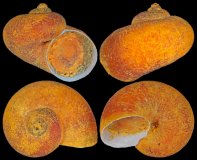
A Crisis in the Wild: A poignant example is Lirapex felix, a deep-sea snail named for the researchers’ sheer luck in finding just one specimen on each of two separate expeditions. It officially entered the IUCN Red List as Critically Endangered, driven entirely by ongoing mineral exploration in the Indian Ocean.
The Power of Protection: In contrast, Provanna exquisita, an ornate snail that lives exclusively within the safety of the Mariana Arc of Fire National Wildlife Refuge in the Pacific Ocean, was assessed as Least Concern. Its habitat falls within a Marine Protected Area (MPA) where mining is strictly prohibited.
Mirroring the wider vent-endemic mollusc group, 11 of the 17 newly assessed species (nearly 65%) are at risk of extinction due to deep-sea mining for valuable minerals. This includes:
Critically Endangered (3): Astyris thermophila, Neolepetopsis ardua, and Lirapex felix
Vulnerable (8): Cocculina aurora, Eulepetopsis crystallina, Neolepetopsis gordensis, Thermomya sulcata, Neolepetopsis prismatica, Sinepecten segonzaci, Provanna beebei, and Solemya calypso
Least Concern (6): Admete verenae, Benthomodiolus erebus, Cocculina enigmadonta, Lepetodrilus concentricus, Lepetodrilus guaymasensis, and Provanna exquisita.
The Race Against Total Extinction
Because many vent species are endemic to a single vent system, their habitats are structurally limited; if a vent is severely damaged or destroyed by mining, entire species could face total extinction.
This extreme urgency compelled the Senckenberg Ocean Species Alliance (SOSA), which is part of the Senckenberg Forschungsinstitut und Naturmuseum Frankfurt, to help coordinate these mollusc assessments, paving the way for a broader scientific initiative to catalog global extinction risks. To tackle this monumental task, the Marine Invertebrates Red List Authority (MIRLA) – a group led by SOSA aiming to dramatically increase marine invertebrate representation on the IUCN Red List – has convened a special volunteer ‘Vent Red List’ group.
This dedicated international team of 15 members has already embarked on ambitious plans to assess over 500 vent-endemic species. Their vital work will expand far beyond molluscs to evaluate other highly vulnerable, specialized vent animals, including deep-sea worms and crustacea.
“These mollusc assessments reveal just how vulnerable vent-endemic life is to deep-sea mining,” says Dr. Ekin Tilic, member of the Red List Vent working group and head of Senckenberg’s Invertebrates III Section. “This data represents the critical stories and baselines we must bring to mining negotiations.”
A Timely Opportunity to Inform Deep-Sea Policy in Jamaica
The publication of these assessments coincides precisely with pivotal negotiations at the ISA meeting in Jamaica this month. As country delegates debate rules meant to govern the international seabed and its minerals, these assessments map out exactly what stands to be lost.
"The reality is that these vent-endemic molluscs are the exception to the norm," Prof. Dr. Julia Sigwart, co-founder of the SOSA project and mollusc expert, notes. "For the vast majority of deep-sea invertebrates, we lack formal IUCN Red List assessments. We are working to bridge that gap through our working groups, but you cannot safely regulate or monitor an industry when the baseline data required to prevent extinction does not exist."
Senckenberg and the SOSA project joined the growing global chorus of scientists, indigenous groups, and international governments calling for a moratorium on deep-sea mining last year. The message to the ISA delegates in Jamaica this month is clear: test and pilot mining should not be allowed to proceed until we have the comprehensive scientific knowledge – including extinction-risk assessments – necessary to guarantee we are not destroying whole species and their habitats.
To share this message directly with international decision-makers, the Senckenberg Ocean Species Alliance’s Dr. Alica Torkov and Carly Rospert are on the ground in Kingston, Jamaica, attending the International Seabed Authority meeting.
Notes to Editors
About the Senckenberg Ocean Species Alliance (SOSA): SOSA is an initiative within the Senckenberg Forschungsinstitut und Naturmuseum Frankfurt dedicated to accelerating the discovery, protection, and public awareness of marine invertebrate species before they go extinct.
About the Three Deep-Sea Mining Targets: 1. Hydrothermal Vents: Geologically active fissures supporting highly endemic life sustained by chemosynthesis. Targeted for seafloor massive sulfides (rich in copper, gold, and silver). 2. Polymetallic Nodules: Potato-sized mineral deposits lying on the vast abyssal plains, hosting unique sponge, coral, and microbial communities. Targeted for nickel, cobalt, manganese, and copper. 3. Cobalt-rich Crusts: Mineral layers formed over millions of years on the flanks of underwater seamounts, which serve as critical biodiversity hotspots for deep-sea corals and migratory marine life.
About the IUCN Red List: The IUCN Red List of Threatened Species™ is the world’s most comprehensive inventory of the global conservation status of plant and animal species, utilizing a strict, peer-reviewed scientific framework to determine extinction risk.
About the ISA Meeting: The International Seabed Authority is meeting for the second part of its 31st session from July 13 to July 24, 2026, in Kingston, Jamaica, where member states are working to finalize a "Mining Code" that would transition the oceans from exploration to commercial exploitation.
Ansprechpartner
Prof. Dr. Julia D. Sigwart
+49 (69) 7542-1272
Katharina Decker
06975421595
Zuständigkeitsbereich: Referentin für Presse- und Öffentlichkeitsarbeit
Datei-Anlagen:

(238 kB)
1617220.attachment
The deep-sea snail, Lirapex felix, is found exclusively at a single hydrothermal vent field in the Indian Ocean and has now been classified as endangered due to mining exploration activities in the area.

(141 kB)
1617221.attachment
The sea snail, Provanna exquisita, whose habitat lies within a marine protected area in the Pacific Ocean, has been assessed as Least Concern.

(102 kB)
1617222.attachment
The bivalve, Thermomya sulcata, has been assessed as Vulnerable.
- Mehr Infos zu dieser Meldung unter www.pressebox.de
- zurück zur Übersicht